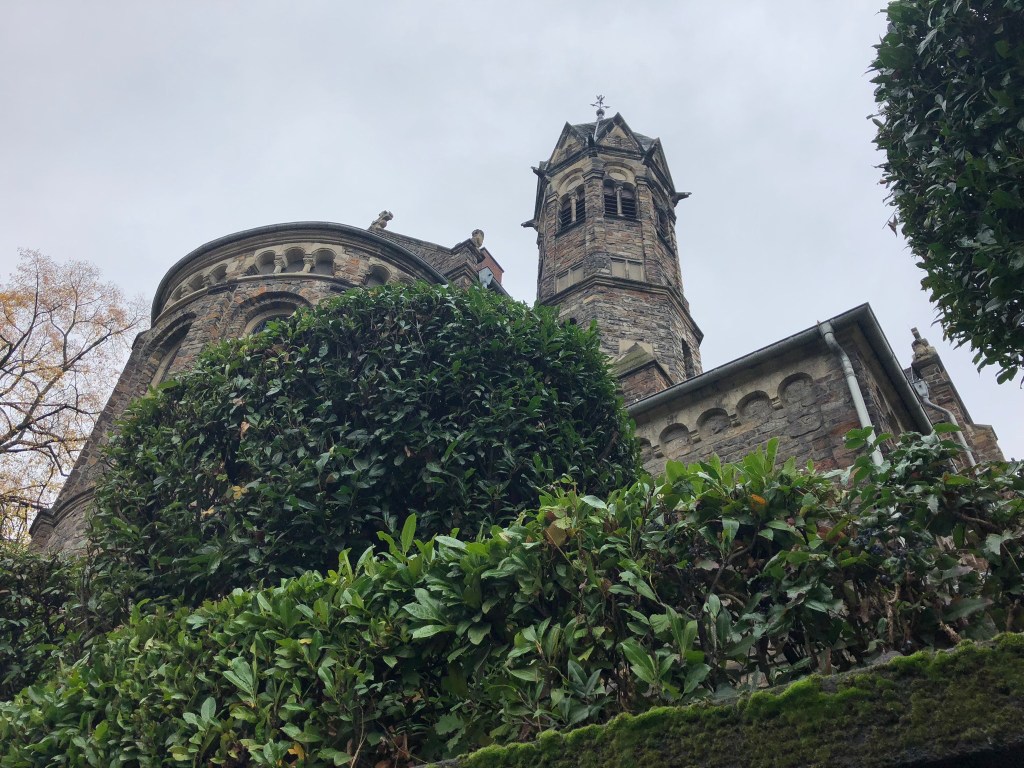
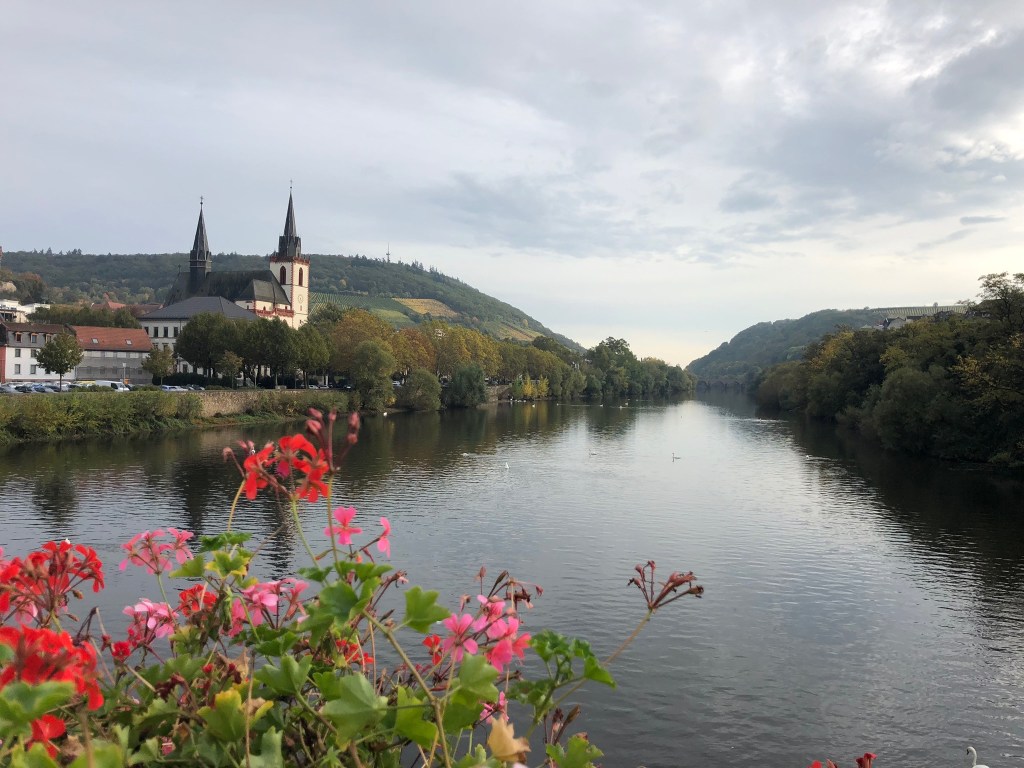
‘Visiting Wounds’ – A Plenary Address to the Ecumenical Youth Gathering, 11th WCC Pre-Assembly, Karlsruhe 2022

In response to various requests, I’m making available the manuscript of my Plenary Address to the Ecumenical Youth Pre-Assembly of the 11th Assembly of the World Council of Churches in Karlsruhe, Germany, on August 26th, 2022. 

While the text that follows is not a sermon, I prepared it to be delivered in that mode. Thus, the document reflects my preaching and speaking style. I wrote the text to be heard, not read. The grammar and punctuation match the document’s initial aim. Undoubtedly, much of what I actually said cannot be found here, but the main ideas and general thrust of the text are consistent with the spoken word


Photo Credit: Ecumenical Youth Gathering, World Council of Churches

I wonder, during your time together, have you all discussed the fact that, in the ecumenical movement, the term ‘youth’ tends to include a whole mess of people? 

Folks are called ‘youth’ from the time they become teenagers to the time they hit thirty-five (and sometimes people even fudge it and make it forty)! I have found that, at least in my region, you can judge where someone is on the spectrum of ‘ecumenical youthfulness’ by the kind of computers they used growing up. 


Now, I’m only thirty, and when I was younger, I had my own computer, but it was the kind that many of you would probably go to see in a museum.  It was huge, bulky, and horrendously slow. 

One of my most formative teenage memories occurred in front of that big old beast of a computer. After school one day, the rest of my family went out for some event, but I stayed home to finish my schoolwork.  For once, I was alone in the house. I clicked my way to YouTube. Fearful that someone might see what I was watching, I minimised the window to the smallest it could go. By the time I finished manoeuvring the window, it was a tiny square in the right-hand corner of the big screen.

I was terrified. My heart was racing!

I put on my headphones and clicked the play arrow. I paused the video, which was several years old by then, every few seconds to check over my shoulder at the door or look out the window to check the driveway—I could not risk anyone seeing what I was watching.

So, with trepidation and in fits and starts, I watched as the Vicky Gene Robinson was consecrated as the Anglican Communion’s first openly gay Bishop.

I also watched a news real in which Robinson read a few of the death threats he had received in the days preceding his consecration. I watched as the cameras panned over the mass of angry protestors calling him every name in the book. I watched as Robinson added a new liturgical vestment to the ensemble when he lifted a heavy bullet-proof vest over his shoulders and tried to cover it with his Alb prior to the worship service.   

The organ started playing, and the precession began. Tears filled my eyes as the historic symbols of his office—the stole, the ring, the mitre, the chasuble, the staff — were conferred upon him. 

I was terribly afraid yet filled with hope. 

I am not even an Episcopalian and I did not understand why someone needed to wear all that fancy stuff just to be ordained; Even so, I was enwrapped by a feeling of embrace and acknowledgement that I had never before experienced.

The Most Rev. Frank T. Griswold III, gathered with other bishops of the Episcopal Church during the ‘laying on of hands’ at V. Gene Robinson’s consecration as the Bishop of the Diocese of New Hampshire in 2003.
Photo Credit: Ray Duckler, Concord Monitor

For the first time I can remember, I bore witness as the church affirmed God’s call upon the life of someone like me. For the first time, I came face-to-face with a possibility I had never before envisioned. I came to know the profound truth that one can be both openly gay and faithfully Christian at the same time.  

I’ve encountered God many times on life’s road, and the scales have fallen from my eyes more than once, but I will never forget Gene Robinson’s courageous witness as he took up the bishop’s mantle. 

By simply being who he was and living as God called him to live, he let a little light shine and enabled me to catch a secret glimpse of a different world and a brighter future of healing and hope, not only for myself, but also for the church.  


I grew up in a fundamentalist tradition. The institutions of which I was a member had many lists of people and groups they thought God had called them to exclude. In truth, pretty much everyone with whom we disagreed was bad, but being gay was the worst thing you could be.  Perhaps because of where my faith journey began, rather than in spite of it, I set out on a journey to understand what scripture and the church’s tradition have to say both about me and to me.

I was a long way from embracing who I am as a gay Christian back then. So, perhaps I did not consciously set out in search of some enlightened goal of self-actualisation. More than anything else, I suppose, I believed that, if I were to ask real questions about the concerns that dominated my life, I might as well start with the sacred texts and beliefs to which so many of the faithful people around me turned for guidance.

The road toward a deeper understanding of God’s call on my life was a bumpy one, especially in the beginning. Yet, even as I dedicated myself to the vein search for security that so often characterises the fear-filled world of fundamentalism, God’s grace continued to break down the doors and call me home.


These days, I spend most of my time studying the church’s history. I am regularly in awe of how our faith communities exhibit both the potential to change the world for the better and the capacity to inflict deep and lasting wounds.

I know this is not exactly a great advertisement for ongoing involvement with ecumenism, but here is a secret that is often kept from young people at gatherings like this: Though there is nothing more beautiful and enriching than being part of this movement when it lives up to its stated values, the deeper you get into the life of the world church, the more astonished you will be by its humanity – by its brokenness, by woundedness and capacity to wound.

The church is filled with people from across the world who call themselves siblings in Christ. The church is that one place where many of us have felt fully known, wholly embraced, and absolutely secure in the loving arms of a saviour. Yet, for all its warmth and holiness, it is also a place where we can experience real violence. 

Like an abusive friend or loved one, the church can cut you to the bone and then, lest you seek a soothing balm elsewhere, offer you a tattered bandage to suture the wounds it plans to inflict upon you again in the future; This is especially true if something about you does not conform to what some people say a Christian should be. 

The church is a gift from God to the world, but in its institutional, historical, empirical, and (YES!) political form, it often feels like anything but a foretaste of heaven. 

The church may be eternal, as some of our traditions suggest, but it also exists within the confines of history, and human sinfulness mars any attempt to perfect unity, equality, or justice within its institutions and councils. 

Some of you, perhaps even most of you, may come upon moments in your life in which you feel called to follow a path trodden by many before you. Perhaps you will come to a point at which you believe you must leave the church to find God.

Today, you might critique the theology of such a statement, but I caution you, tomorrow you may find that it speaks to the depths of your wounded soul. If I happen to be with you when such a moment of pain comes, I will not try to put a dirty, warn-out old bandage on your wounds. I will not try to sell you some cheap hope to numb the pain and hush the anger so that you and our world can be wounded again, and again, and again. I will only tell you what I believe. 

I believe that, in spite of its constant failures and the increasing irrelevancy of its dialogue, the values enshrined in the church and, by extension, the ecumenical movement; the values of unity amid diversity, diakonia amid difference, and the promise of just reconciliation in Christ are the world’s last best hope. 

Whether you agree with me on the questions facing the world church or not, this movement needs you. Not just your free time or a few weeks this summer– It needs your life and your faithful witness to Christ so that it can more fully realise his mission. It needs to be confronted with your stories of pain, and anger, and frustration, and joy, and hope, and love.  

For those of you who have been and continue to be wounded by the world church, I cannot, and I will not ask you to stay in an abusive relationship. Once again, all I can do is tell you of a promise in which I trust.

I trust that wherever you find yourself on the spectrum of ecumenical youthfulness and wherever you fall on life’s other spectrums, you are not alone.

God sees your wounds, even if the church closes its eyes. God hears your cries of anguish, and pain, and righteous anger at injustice, even if the church covers its ears. God’s heart breaks when yours breaks, even when the church’s heart is hardened. 

In life, and in death, and everywhere in between, whoever you are and wherever your journey started, whether your pastor, or your priest, or your bishop, or your church, or your family, or your friends—whether anyone else supports you or not – you belong to God, and God will always be there to welcome you home.                                              

Amen.
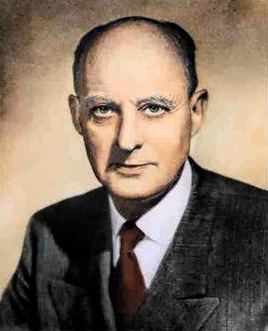
‘Liberative Linguistics’ Project Interview – Lani Anaya Reflects on Ecumenical Formation


It was a joy to chat with Lani Anaya about our shared passion for ecumenical formation this past August.

Lani is a member of the Methodist Church of Mexico. She holds a Bachelor of Arts in International Relations from the National Autonomous University of Mexico, a Master of Science in Peace & Conflict Studies from Uppsala University, a Complementary Certificate in Ecumenical Studies from the Ecumenical Institute at Bossey. She has also studied at UC Berkeley and the National University of Malaysia and is currently pursuing a Master of Arts in Ecumenical Studies at the University of Bonn. Lani has taught ecumenics & inter-religious studies in Mexico and brought extensive practical experience to our discussion. As part of her studies at the University of Bonn, she is conducting ethnographic field research under the supervision of Dr. Matthew Robinson (who also supervised my MA thesis) on ecumenical formation in Latin America.


Our conversation was prompted by some of recent work on what I am calling “Liberative Linguistics.” The interview is informal. We did not initially plan to make it public, but I felt that Lani’s insights were too valuable to be confined to an academic paper.


As you will learn from the interview, the concept of “liberative linguistics” is still under construction. I presented a paper that drew upon some of the key points we discussed in the interview at the ‘Reconciliation Post-Graduate Conference’ of the Society for the Study of Theology at Newnham College, University of Cambridge in September.

Currently, I am attempting to clarify my expectation that short-term study and exposure programs like the Global Institute of Theology (GIT) of the WCRC and Global Ecumenical Theological Institute (GETI) of the WCC, along with graduate programs in ecumenical studies like those offered at the Bossey Institute, University of Bonn and Irish School of Ecumenics provide unique opportunities to develop new linguistics around human sexuality, which could empower the global church to discern Christ’s liberating identity anew.

The inability of transnational ecclesial bodies to facilitate constructive dialogue on human sexuality, especially regarding the inclusion of sexual and gender minorities, does not mean that grassroots discussion of related questions has stopped. Ecumenical initiatives like those cited above generate temporary but creative spaces where the lines between grassroots praxis, theological diatribe, and ecclesial bureaucracy are blurred.

International exposure programs open windows through which young theologians can glimpse diverse expressions of Christian identity that supersede hetero-patriarchal, cisgender, nationalist, and neo-colonial norms.

Thus, the goal of liberative linguistics is to liberate the discussion of divisive topics like human sexuality and gender identity in a way that moves beyond the binary between traditional values and sexual liberation. While maintaining a commitment to the preservation and promulgation of human rights, this project seeks to understand how ecumenical formation programs might empower the global church to develop new linguistics that honour contextual specifics and draw upon historically Christian religious symbology to effect positive change in the world.

The ultimate aim of any linguistic that liberates should not only be to carve out space for all of God’s children around the table of grace, but to deconstruct the faulty assumptions that keep us from embracing one another when we gather in anticipation of the feast.

The Siege of the Capitol and the Two Wolves: Reflections on Pride and Irony with Reinhold Niebuhr

Perhaps this personal journal entry from January 7th, 2021 is too raw to be shared publicly. Maybe its contents are irrelevant in light of all that others who are more ‘tuned-in’ than I have shared. Nevertheless, I felt compelled to write. If you know me as someone who has been your pastor, please forgive me for overtly sharing my political views. The views expressed here are mine alone and do not necessarily reflect those of any organizations I currently represent or have represented in the past.


The German-American pastor, theologian, and social ethicist Reinhold Niebuhr argued that there is a deep irony at the heart of the idea that is the United States of America. In the absence of a monolithic cultural identity, we rely on supposedly timeless concepts to make meaning out of our social existence. Words like freedom, justice, equality and liberty can move us to tears at a moment’s notice.

Karl Paul Reinhold Niebuhr (1892-1971)

Our ideals challenge us to realize a great society characterized by limitless possibilities for achievement and unbridled affirmation of all who strive for a place in this world. On the other hand, our history is marked by a terrifying inability to live up to the standards we set for ourselves. Time and time again, we have bastardized calls for resistance to injustice into proclamations that support tyranny. 


This morning, I had an overwhelming feeling of… pride in my country.

You might ask, ‘Umm, have you not watched the news this week or for the past four years?’ I have. So, why am I proud? Is my pride a healthy, honest, and self-critical form of pride? I cannot answer all of these questions fully. I will simply say that I am proud because no matter how disgusting that shit-show we saw at the capitol this week was– no matter how blatant the discrepancy is between the way Trumpeters and BLM folks are treated by law enforcement– no matter how audaciously some congresspeople spouted lies in their desperate attempts to satisfy a “selfish man’s wounded pride…” enough people stood up and did the right thing.

Maybe I am stretching into the abyss to find something to celebrate; Should we really be happy when our elected leaders do little more than their job and show concern for disorder only after it breaks into their workspace? I don’t know, but I feel what I feel anyway.  

I feel a sense of humble pride and deep respect for many of my country’s elected leaders who stood up to the child who would be king. My right arm would fall off, and my right eye would plop out before I would vote for Mike Pence, but the man FINALLY stood up. Mitt Romney, for whom I have never voted, but deeply admire, has again sealed his fate as a voice of the American conscience. Others, too, stood up. Perhaps it is far too late for many to find redemption in history’s eyes, but at least they found some level of courage when it mattered most.

I am proud to be part of a country where something so dire as an attempted coup is met a few hours later with the cold repetition of constitutional procedure; even if we had to wait until the wee hours of the morning to hear the results. What better reminder is there that, if we defend our institutions even as we work to improve them, they can ensure that we are a nation governed by laws and not by people?


There is a deep irony at the heart of the idea that is the United States of America. We know it to be true that since the founding of our nation, high ideals have coexisted with both overt and covert endorsements of oppression and evil. The unholy paradox at the core of our common identity is pervasive and persistent.

It will take generations to overcome centuries of prejudice and institutionalized injustice, but must we not hold on to the hope that the dream will one day become a reality? Must we not long for that shining city on the hill, no matter how dim and distant its light may be? It is dangerous, perhaps even wrong, to proclaim peace when there is no peace, but should we not look for peace even when it seems to be hiding?

We will either make it to the mountain top together or die alone in the valley; This paraphrase of Eleanor Rosevelt’s speech to the United Nations is not a platitude. It is a fact. We can hate each other, fight each other, call each other out for the wrongs we have done and continue to do, but if the ultimate goal is not to make life better for everyone, what the hell are we doing? 


Despite the chaos at the Capitol Complex, the majority of our nation’s citizens used their votes this election cycle to issue a clear message to one another and the world. Yes, Trumpism, racism, isolationism, materialism, and anti-intellectualism are part of our social DNA. Yet, another strand also runs to the core of our national being; It calls us to do justice, love mercy, and walk humbly.

At the start of this new year, our citizens have voted to chart a new path in both the executive and legislated branches of our federal government. Perhaps many of us simply voted for a return to a less tumultuous status quo, but have not many tried to chart a path forward that deals honestly with the problems we face? Have not so many of us voted with the hope of building a better world for ourselves, our communities and those who will come after us? 


There is a deep irony at the heart of the idea that is the United States of America. The irony reminds me of an old Cherokee story my grandmother told me when I was a child. Others tell it differently, but this is how she told it to me with a few embelishments;  

A young boy tells his grandmother, “A fight is going on inside me between two wolves. The first wolf is evil, angry, sad, regretful, greedy, and arrogant. He thinks only of himself. He is falsely proud.  He is ignorant, but he thinks he is smart. He feels like he is better than others and tries to manipulate his friends into doing what he wants. 

The other wolf is good. He is happy. He loves. He wants to live at peace with all. He embodies hope, serenity, passion, humility, kindness, and justice. When he is angry, he has a reason to be. He has pride, but it is grounded in the potential of his community, rather than his own selfish need for affirmation. He is empathetic, generous, honest, and compassionate. He has faith.”

The grandmother responds, “The same fight is going on within me.” 

The grandson asks, “Which wolf wins, grandmother?”

The grandmother answers, “whichever wolf I feed.” 

There is a battle raging in our nation’s heart. We have a choice; will we feed the fires of justice, peace, and unity, or will we indulge false pride, vainglory, and hatred?

I am proud to be a citizen of this country because I believe we have it in us to make the right choice.

Images from Wikimedia Commons.

Come Out! A Sermon on John 11: 38-44

I hastily prepared the following sermon on the morning of Monday, November 13th, 2016. It was delivered at Princeton Theological Seminary in the Rev. Dr. Cleophus LaRue, Jr.’s class titled, Sermons of the Civil Rights Movement. The class session took place one week after the 2016 U.S. Presidential Election. 

Sermons are speech-events. I wrote the text to be heard, not read. The grammar and punctuation match my preaching style. If I were preparing this message today, I would undoubtedly approach the text and construct the outline differently. Nevertheless, I have chosen to preserve the wording, outline, and “rawness” of the original draft.


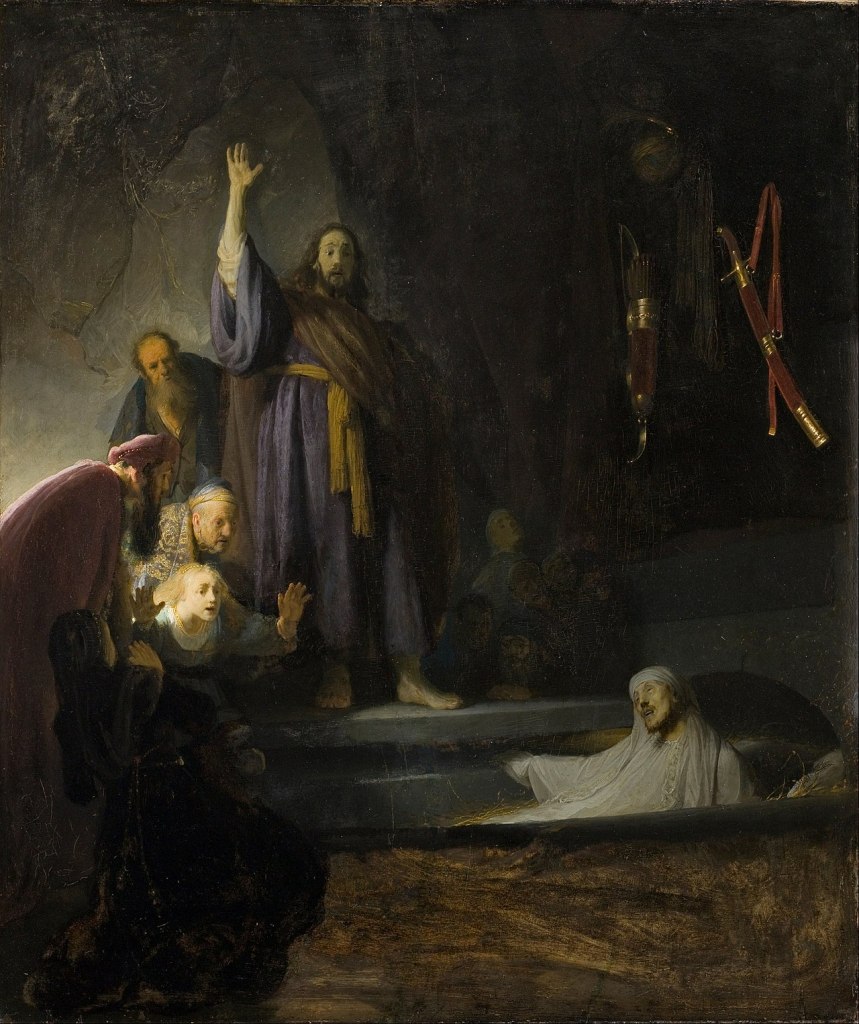
John 11: 38-44 (NRSV): Then Jesus, again greatly disturbed, came to the tomb. It was a cave, and a stone was lying against it. Jesus said, “Take away the stone.” Martha, the sister of the dead man, said to him, “Lord, already there is a stench because he has been dead four days.” Jesus said to her, “Did I not tell you that if you believed, you would see the glory of God?” So they took away the stone. And Jesus looked upward and said, “Father, I thank you for having heard me. I knew that you always hear me, but I have said this for the sake of the crowd standing here, so that they may believe that you sent me.” When he had said this, he cried with a loud voice, “Lazarus, come out!” The dead man came out, his hands and feet bound with strips of cloth, and his face wrapped in a cloth. Jesus said to them, “Unbind him, and let him go.

“Raising Lazarus” by Rembrandt

“Gay brothers and sisters, you must come out. Come out to your parents… come out to your relatives… come out to your friends… come out to your neighbors and your fellow workers… Once and for all, break down the myths, destroy the lies and distortions. For your sake, for their Sake, for the sake of the youngsters who are becoming scared by votes from Dade to Eugene [counties], Come out.” (Milk, 2009, Film)

I listened to this reproduction of Harvey Milk’s famous speech for the first time when I was sixteen years old. My friend Dan (not his real name) had smuggled a copy of the movie, “Milk,” down to his room in the basement. He took every precaution and made sure his parents did not see the package.

We watched with awe and with terror. We made sure the volume was on the lowest possible setting. We stopped the DVD every time we heard movement upstairs. We wondered how such a thing could happen; how people could just be… themselves.

“Milk” movie poster from 2008.

The idea that someone could be gay was not alien to us. We were raised as fundamentalist Christians. We went to fundamentalist schools and churches. We had fundamentalist friends.

We heard about gay people almost every day.

In our circle, there was absolutely nothing worse than being gay. The “gay agenda” was a topic of regular conversation. Teachers laughed or looked the other way when a student called someone the “F” word. Students in a Bible class small group held a mock debate that explored the question, “should homosexuals be stoned?”

I once asked a teacher, “what would happen if a gay person came to our school?” He looked at me with an expression that blurred the lines between surprise and disgust. He asked, “why would any of them want to come here?”

Huddled in that cold, damp basement, I heard Milk’s words, and my heart began to race. I wanted to believe him. I wanted to embrace the possibility of liberation, but then reality set in.

I thought to myself, “Milk’s words cannot be meant for me. Being gay can never be who I am; It must always be something I will never do again.

Coming out was not an option; To be gay was to be confined to the closet… to the tomb.

As the movie ended, we realized that Milk shared our love for the Italian opera, Tosca.
With all the melodrama Dan could muster, he recited the words, “Beware, this place of tears.”


By the time Jesus gets to Bethany, Lazarus is dead, wrapped-up, and confined to the tomb.

Mary and Martha had sent for Jesus, but he had waited too long. They say together, “Lord if you had been here, my brother would not have died.” The sisters lost their brother; Jesus lost his beloved.

In that place of tears, Jesus weeps.

He does not discount the reality of suffering; He enters into it. He does not fall back on his knowledge of God’s greater glory; He lives into his own humanity. For a moment, he allows himself to be consumed by loss. He experiences the despair that tombs bring into our lives.

Yet, Jesus does not stop with despair. He weeps, and then he makes a radical choice. He acts out his love for Lazarus in full-view of the onlooking crowd.

The stone is rolled away. A prayer is offered to the God who always hears.

Jesus steadies himself. He wipes the tears from his eyes, swallows hard, and lets out a cry the pierces every listening ear, “LAZARUS, COME OUT!”

The cry of love pierces the vail and slices through the darkness of the cave. The dead man comes out; The repressive power of the tomb can no longer hold him!

Jesus orders Lazarus unbound and set free. The chains of death are broken; Freedom is on the loose. The stone is rolled away; The closet door is flung open. The tomb is empty; Resurrection has come.


The biblical scholar Robert Goss has said, “resurrection is the dangerous memory of God’s coming out” (Goss, Queer Bible Commentary, 2006).

Everyone in this room has read on to the 21st Chapter of John’s Gospel. I do not have to remind you that Lazarus will not be the last to experience liberation from a tomb. The story we read today is but a foreshadowing of God’s coming out to the world as who God really is; dangerous, radical, resurrecting love.

Jesus comes out to the world as the one who will be raised by calling his beloved to break free from a closet-tomb.

Like gay people who break free of the lies, distortions and crucifixions we are forced to bear in the closet… the death that self-hatred so often brings; the risen Christ comes out as an eternal reminder that the stone has been rolled away and the tomb has been emptied. Death, exclusion from life, does not have the final word.

In the risen Christ, eternal life breaks into the here and now. In the risen Christ, Milk’s dream of breaking down every closet door is realized. In the risen Christ, the outed God is made known to the world as radical, all-inclusive, tomb-emptying, bond-freeing love.

In a poem I memorized when I was six year’s old, Robert Browing dramatizes the strange (queer) love of God in Christ;

“The very God! Think, dost thou think?
So, the all-great were the all-loving too—
So, through the thunder comes a human voice

Saying, “O heart I made, a heart beats here!
Face, my hands fashioned, see it in myself!
Thou hast no power nor mayest conceive of mine,
but love I give thee, with myself to love,
and thou must love me who have died for thee!
The madman saith: it is strange.”
(Epistle… of Karshish)


Coming out can be powerful experience. Coming out is characterized by joy and self-realization; It can also be marked by profound risk, vulnerability, and even suffering.

In Jesus’ day as in our own, the queer story of resurrection will evoke faith in some and hatred in others. If you have read on in John’s Gospel, you know that no sooner has Jesus raised his beloved, then the religious leaders have started plotting to confine him to a tomb of his own. You know that his road to resurrection must first make a pit-stop at Golgotha.

Those of us who take heart in the promise of resurrection, know that we too will have to make a few pit-stops along the way. Suffering may not save, but the saved will suffer. The resurrection promise that gives life to our faith will inspire doubt, fear, and even hatred in those who wish to confine the vulnerable to the non-life of the tomb.


Like so many of you, I have spent this week grappling with all that has transpired on the national stage. I have stood speechless before a Latinx high schooler who was moved to tears because he was afraid that one day he might go home from school to find that ICE has deported his parents. I have answered that late-night phone call only to find that a friend was verbally assaulted in a grocery store for shopping while black. I have listened to a transgender woman who worries that someone might kill her tomorrow and that no one will care.

“Lord, if you had been here…” How often these words have resonated with me of late.

I have tried to hold my tongue; to play the role of a bipartisan pastor; to preach sermons about our baptismal unity in Christ. I have tried, but I do not know how much longer I can hold out.

How can I embrace unity amid disagreement when our disagreement is rooted in the desire of some to entomb the people I am called to serve?

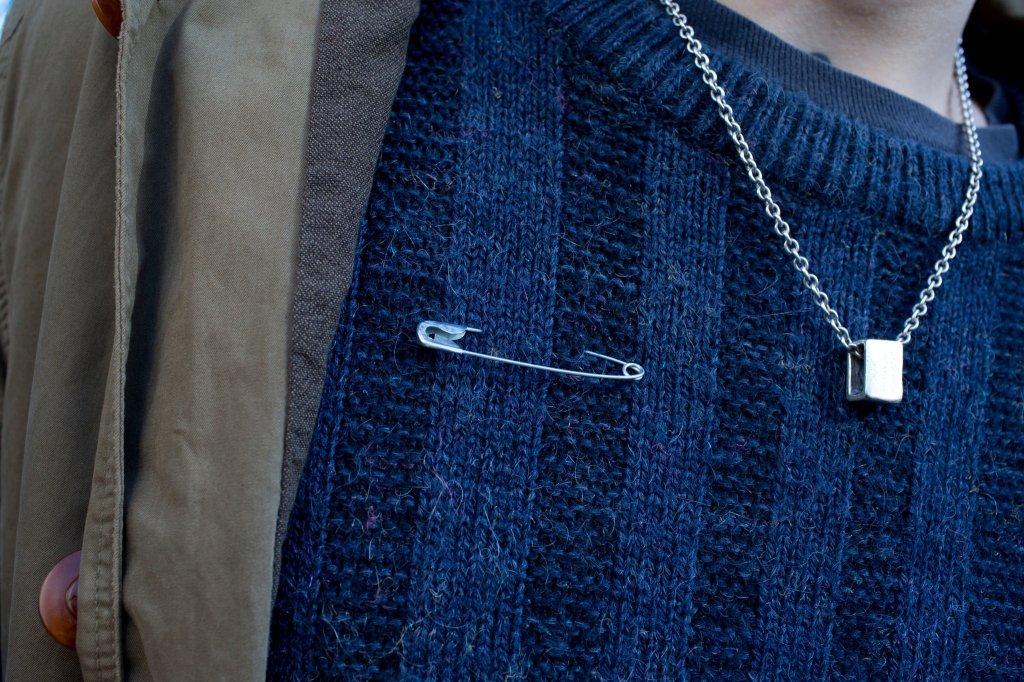
There have been times this week that I have felt the temptation to fall back on my privilege, to be another silent white guy, to be another cisgender male who can pass for straight when things get too tricky. To wear a safety pin, pat myself on the back, and throw in the towel; To climb back into the closet and let death win.

In the wake of the 2016 U.S. Presidential Election, many Americans wore safety pins to demonstrate their support for vulnerable populations.

So often, those of us who claim to live by resurrection hope, find the false-security of the closet more appealing than the open air of God’s kin-dom, but there is no life to be found in the closet.

Closets, like tombs, are places of death; resurrection is the dangerous act of coming out. To be Christian is to come out as a people who are fundamentally opposed to the forces of death that would have the bodies of the marginalized bound up in the tomb like Lazarus.

This week, our society has spoken; the deathly plot that has poisoned the groundwater of our nation’s history stands before us as an immovable stone. We are afraid to roll it away; to call it what it is, because the stench of prejudice, fear, and hatred might just overcome us.

Oh, but people of faith we have heard the voice of Jesus crying from beyond the darkness of the tomb; Can you hear his command? Will you heed his cry? Will you come out?


Rembrandt & Milk images are from Wikimedia Commons.
Safety Pin Image, Andrew Lichtenstein/Corbis, via Getty Images

When Fear Lies: A Lesson from Flight School

I’ve wanted to be a pilot since I was three or four years old. One of my earliest memories is of a weekend trip to Myrtle Beach. On the way there, I sat in my grandfather David’s lap in the cockpit of a King Air C90.

I squeezed his hand in fear as the pilot yelled out the window, “clear prop!” The plane’s Pratt & Whitney turboprops roared to life; first the right, then the left. The sense of fear that had captured me dissipated quickly as the choking and spiting of the engines morphed into a loud but soothing hum. Looking back, I imagine that I felt safe there with him between those whirling blades, maybe safer than I’ve ever felt since.

Beechcraft King Air C90B.

My grandfather died several years later, but my grandmother, Katie, continued receiving monthly issues of his favorite aerospace magazines. One afternoon she noticed me thumbing through a copy of Executive Controller. From that day until she moved into a new home, she passed every issue on to me.

I was hooked! Whenever I arrived for a weekend visit, I made a bee-line for the kitchen where she kept her mail. I pulled the relevant magazines out from under the pile, ripped off their plastic covers, and started reading. After memorizing performance, weight, and balance stats for the major aircraft classes, I set to work categorizing them by average operating cost, useful load, and early environmental impact estimates. Within a few months, I could look at a plane flying overhead and tell people much more about it than they ever wanted to know!


I finished my term of service as a pastor at Bryn Mawr Presbyterian Church in June of 2019, but I wasn’t scheduled to start school in Bonn until the end of September. Never one to find grace in being idle, I needed a mission in the meantime.

It occurred to me that I might never have a better opportunity to work toward my life-long dream of becoming a pilot.

I called a local flight school and signed up! One week later, I was standing with my instructor on the ramp of Hickory Regional Airport, conducting my first preflight inspection. Thirty minutes after that, I was in the air, and my instructor was introducing me to the flight control systems.

The months that followed were anything but a relaxing vacation. I spent most mornings at the airport or in the sky, building skills, and getting to know the Cessna 172’s I was privileged to fly. In the afternoons and evenings, I worked through “ground school” materials gaining additional knowledge of aerodynamics, flight instruments, FAA regulations, navigation, weather systems, and cross-country flight planning.

One Sunday afternoon, I received an unexpected call from my flight instructor. A local aircraft leasing company had acquired a 1976 Cessna Skyhawk II with a U.S. Bicentennial Edition paint-job and an engine modification that gave it twenty-extra horsepower. He invited me to tag along on an in-flight inspection of the newly purchased craft.

Excited by the opportunity to log a free hour of flight-time, I agreed to meet him early the next morning.

When I first approached the plane, I could tell it had been left outside of the hangar for too long. The red, white, and blue stripes on the fuselage were faded and cracked. It needed some TLC. Thankfully, the wear-and-tear was cosmetic; Everything seemed to be in working order.

We completed our preflight evaluation, settled in, went through the checklist, contacted the tower for clearance, and made our way off the ramp & down the taxiway. The next stop was the runway threshold. We got takeoff clearance and ran through another checklist. Then, we were off.

Racing down the runway, we hit 60 knots. We rotated and were airborne.

“Oh, shit!” I shouted into the headset. The latch on my cabin door had released!

My eyes fixated on the quickly receding airfield beneath me. “Lean back,” my instructor commanded. “I’m going to bank left. The pressure will force the door closed.” I leaned back. He banked, but the door wouldn’t re-latch. “We’re going to try it again,” he said. “This time, you have to push the door open while I rotate. Then, pull it shut.”

“Oh, sure,” I thought sarcastically. “Let’s turn the plane so that I’m dangling over thin air and then push the door that is holding me in this God-forsaken death trap even further open; That sounds like a great idea!”

Setting aside my doubts, I obeyed. It wouldn’t bode well for his CV if he dumped a student out of a plane. He must have known something I didn’t.

It worked! The door re-latched!

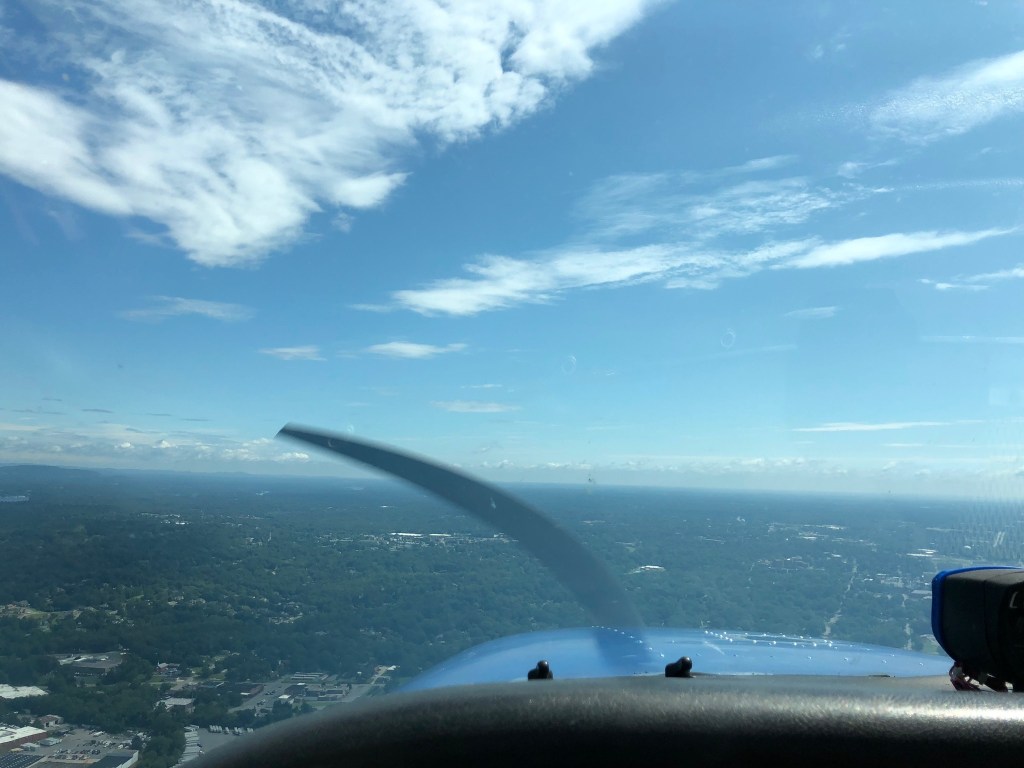
view of Lake Hickory from the same plane one week later

Once on the ground, we taxied to the service hangar. The experienced mechanic knew immediately what had happened. According to him, door latches on old Skyhawks are notorious for popping open mid-flight. A 2.5-inch spring was incorporated into the door handle, which made it easier to open and close the doors. After years of use, the springs weakened, and problems arose. His radical solution to the problem was to grab a screwdriver and remove the spring. It took three minutes, and the door works fine without it.

In truth, I was never in serious danger; A fact of which I should have been aware.

Unpressurized planes are capable of flying quite effectively without doors. Plus, the force of the wind relative to the aircraft was actually holding the door closed, even if the handle wasn’t securely latched. I caught a glimpse of the ground beneath me because the force of the latch’s initial release was greater than that of the pressure being exerted on the fuselage by the wind. The safest option in such situations is to do exactly what my instructor did, even if it seemed crazy to me at the time.

In that adrenaline-filled moment, my earth-bound mind tricked itself into believing that he was about to dump me out onto the parking-lot 2,000 feet below! In fact, by rotating left, he increased the air pressure on my side of the plane. When I pushed the door open, the pressure helped me slam it shut while the seatbelt held me securely inside.


In the language of the Abrahamic faiths, reverent resignation to a greater power (fear of the Lord) is the beginning of wisdom, and knowledge of the divine identity is the epitome of understanding (Proverbs 9:10).

Fear is a necessary biochemical mechanism that plays a vital role in the life-cycle; It is an essential component of the drive to survive. The adrenaline rush that activates fight-or-flight responses often empowers us to get to the heart of a matter and take swift action.

Fear can also distort our perception of reality. It was Kipling who said, “of all the liars in the world, sometimes the worst are our own fears.”

Unbridled fear takes on its own life. Left unchecked, fear can drag us into a state of introversion that inhibits healthy ambition and curiosity. It can also push us toward bombastic extroversion, which fills relational space between people and groups with sarcasm masquerading as gravitas. Unhealthy manifestations of existential anxiety keep us from asking critical questions of ourselves, our relationships, and the world.

We humans live in constant fear of being left out, losing our job, getting a bad grade, or catching some incurable virus. We construct thought-worlds on the shifting sand of self-reliance because we are too scared to trust the intentions of others. We convince ourselves that this way of living is the only realistic option. We know we are embracing a lie as truth, but that knowledge only intensifies the vehemence with which we affirm fear’s power. We dare not question its hold on us, for it might take revenge and push us over the precipice into the bottomless cavern of nihilism.

Our internalized terrors are both the cause and consequence of the systemic problems facing our world.

We allow politicians and pundits to stoke our fears. We offer no challenge when they create wedge-issues that drive us apart and turn earnest talk of unity and peace into tropes on sarcasm. In the world we’ve constructed, serious candidates for public office are those who talk like revolutionaries while leaving the logic of fear unchallenged.

The methods of argumentation employed by conflicting parties cannot be distinguished; only the talking points differ. This truism holds across time and context. One group recognizes they have no valid alternative to the divisive politics of the powerful, so they instill fear in the hearts of their supporters. They hope a solution to the world’s problems will present itself after they have beaten their deplorable disputants. Meanwhile, the powerful ignore frustrated cries for truth and justice, choosing dishonor over courage. Trust erodes. Systems break down. Then, the roles reverse, and the cycle repeats.

Truly, there is nothing new under the sun (Quohelet 1:9). Everything stays the same, because all parties, including “the people” whom our leaders extol (AKA: you and me), are complicit. We don’t want anything to change, because the politics of fear is all we’ve ever known. We’re terrified that the alternative might push us beyond our comfort zones, dump us out of our safe spaces, and into the unguarded abyss below.


In an uncertain world, the opposite of unhealthy fear is not courage, but trust. Student pilots understand this truth as well as anyone.

Without trust, flight training is a dangerous waste of time. When fear lies, new pilots don’t have the experiential resources they need to chart a path toward safety. Trust is required, but it is also risky, especially when you barely know the person who is ultimately responsible for keeping you from falling out of the sky.

Pilots strive toward minor goals on their way toward more significant achievements. The first of these goals is the ability to fly solo. Yet, when reliance on an instructor burgeons into confidence in one’s own talents, the element of trust does not go away. At a minimum, solo-pilots must embrace the things they have learned from their instructor. They must also have confidence in the mechanics who service their crafts and the tower operators who make sure they don’t knock each other out of the sky.

Trust is irrational within fear’s logic-paradigm. To trust is to embrace a surprisingly absurd prospect. It is to confess that the final word on life should not belong to our knee-jerk reactions, preconceived notions, and comfortable prejudices. Flight school taught me to embrace this absurd confession and confront the lies fear tells with trust.

We cannot always remain in the safety of a caregiver’s arms. Sometimes we have to stretch out our hands and grab life’s yoke for ourselves; Even so, it is the safety of that grounding embrace and the knowledge conveyed by encounters with the wisdom of others that empower us to confront the distorted logic of fear.

Until we are willing lock hands across boundaries and do battle with the fears that keep us securely fastened in our safe spaces, progress, whether personal or political, will remain paralyzed.

Image of King Air C90B and Cessna Skyhawk in flight are from Wikimedia Commons. All other photos were taken by the author.

Hildegard’s Apotheke

The train ride along the Rhine from Bonn to Bingen transports me into the land of fantasy. I imagine that Esgaroth might lie around the next bend, with Rivendell to follow beyond the distant mountains.

It’s much more likely that the curious traveler who sets out in search of imaginary lands will bump into a factory or a car dealership; A disappointing taste of reality for those who are easily caught up in fairytales.

skatepark under the shadow of an ancient castle and hillside farm, Bingen am Rhine

I sojourned to Bingen a few months ago after getting on the wrong bus. My goal was to visit a new church in Bonn, but I ended up traveling out beyond the city. Refusing to waist a Sunday morning, I found the next train station and checked the map for possible destinations. Bingen was less than two hours away!

I first heard of that ancient German village when I was in seminary. I was introduced to Hildegard von Bingen in a class called “Women Leaders of the Medieval Church.” I fell in love with her writing, worldview, and passion for life. The following summer, I read as many of her works as possible.

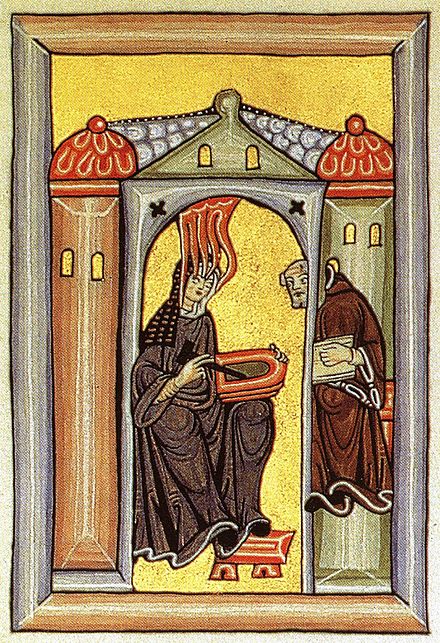
Hildegard, also known as “Sibyl (oracle) on the Rhine,” was a twelfth-century abbess of the Benedictine Order.

She was also a mystic, musician, theologian, medical practitioner, and natural scientist. Her works weave monastic theology, religious extasy, and observational science together in a paradoxically simple and complex web of self-reflection. During her life, leaders and other notables journeyed up the Rhine from across Christendom to seek her counsel.

Image of Hildegard receiving inspiration for her first work “Liber Scivias,” in which she articulates a cosmovision through the lens of salvation history.

I stepped out of the Bingen train station to find a typically modern german town. Noticing the empty streets imposed an annoying realization on my psyche; I should have checked if anything would be open on Sunday before jumping on the train!

Disappointed, but determined, I trekked up the lonely streets until I stumbled upon an old stone church rising out of the mist.

The efficient style of modern architecture that surrounds its humble spires pulls the traveler in an unwanted direction, away from the “all verdant greening” that was both the nexus and inspiration of Hildegard’s thought. This nineteenth-century structure, like its siblings around the town, resists the strain. It pulls the visitor back into the worldview of a mystic, in which the impossible is only that which is still coming to pass.

A Door Without an Entrance, Church of St. Rupertus & St. Hildegard

For Americans, the construction of the contemporary beside the classic in both architecture and thought is somewhat startling. We appreciate dichotomies; Even when we challenge them. Our cities reflect a desire to confine what is ancient to the dead spaces of museums and historical walking tours so that our vision of modernity might not be complicated by remnants of another way of life. In most of the world, such dichotomies are impossible. Things are simply too old, and histories are too long to be made perpetually new.

I suppose my dichotomous American worldview kept me from seeing its own gravest corrective on the way up the hill toward the church. 

My perception was undoubtedly influenced by the fact that I had been nursing a cold for over a week before setting out on the day’s journey. Yet, I can’t shake the feeling that what I saw carried an easily overlooked significance. After completing a self-guided tour of the site, I relatched the church yard’s heavy gate and turned to go down a new street. Realizing that I had forgotten to reset the drop rod, I turned around and was surprised by what I saw accross the way.

Hildegard’s Apotheke (pharmacy) is a bridge between that which we call “pre-modern” and the things we deem “contemporary.”

Hildegard’s Pharmacy

The store was closed, so I didn’t get a chance to ask its proprietors why they chose to name their business after the town’s most well-known citizen. If I had gotten the chance, I pray their answer would have pointed to a deeper motive than the desire to capitalize on a local hero’s legacy. Whatever their inspiration, the decision to name the store in honor of Hildegard reflects at least some awareness of who she was and how she lived. It captures her ability to bridge the imaginary divide between the pains, frustrations, and ailments of life in the world and the life of the soul.

Truth be told, it is difficult, perhaps even impossible, for me to see the world through Hildegard’s eyes.

With Calvin, I can speak of creation as a theatrum glorea, because his image is built upon the assumption that a playwright who knows the plotline sits behind the curtain, guiding the external manifestation of his vision toward its telos. The image of a God who is “other;” who is unmoved and incapable of being caught up in the vagaries of human existence is comforting. At least someone has it all together!

Hildegard’s thought patterns are different. They are alien to the Reformed rationalism that shapes my modernist worldview. They make me uncomfortable. She sees divine presence in everything. God pulsates through creation giving life to life within the cosmic embryo that is God. The image of nature that she paints fills me with awe. I am drawn to her world like a sick person to a pharmacy. I may not understand why, but I feel there is something within it that promises a cure; For what, I am not sure.

I need Hildegard and people like her in my life. I need to be confronted by thought patterns that turn my assumptions about the machinations of the world into questions about the nature of reality.

Perhaps there is wisdom to be found in what is old; In the things that existed before tract housing, plaster casting, and the readymade uniformity that so characterizes an age defined by its longing for the shallow freedom of individuality.

Print of Hildegard from Wikimedia Commons. All other photos were taken by the author.