
I hastily prepared the following sermon on the morning of Monday, November 13th, 2016. It was delivered at Princeton Theological Seminary in the Rev. Dr. Cleophus LaRue, Jr.’s class titled, Sermons of the Civil Rights Movement. The class session took place one week after the 2016 U.S. Presidential Election.
Sermons are speech-events. I wrote the text to be heard, not read. The grammar and punctuation match my preaching style. If I were preparing this message today, I would undoubtedly approach the text and construct the outline differently. Nevertheless, I have chosen to preserve the wording, outline, and “rawness” of the original draft.
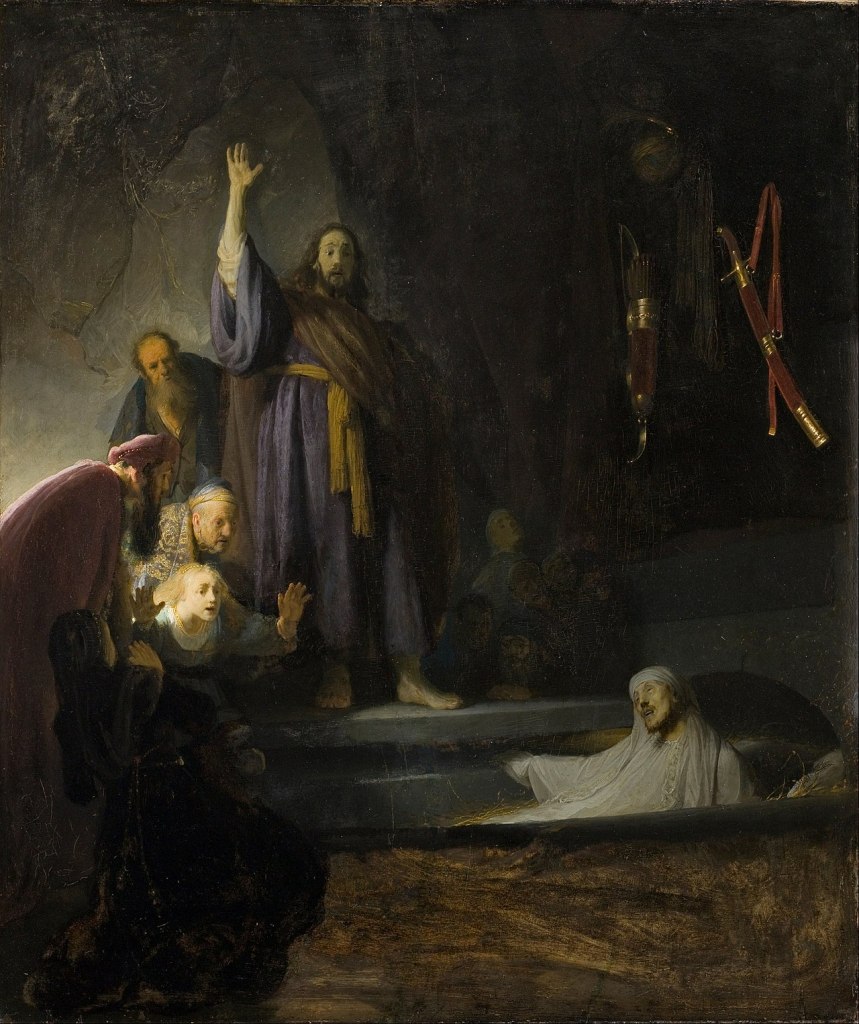
John 11: 38-44 (NRSV): Then Jesus, again greatly disturbed, came to the tomb. It was a cave, and a stone was lying against it. Jesus said, “Take away the stone.” Martha, the sister of the dead man, said to him, “Lord, already there is a stench because he has been dead four days.” Jesus said to her, “Did I not tell you that if you believed, you would see the glory of God?” So they took away the stone. And Jesus looked upward and said, “Father, I thank you for having heard me. I knew that you always hear me, but I have said this for the sake of the crowd standing here, so that they may believe that you sent me.” When he had said this, he cried with a loud voice, “Lazarus, come out!” The dead man came out, his hands and feet bound with strips of cloth, and his face wrapped in a cloth. Jesus said to them, “Unbind him, and let him go.”
“Gay brothers and sisters, you must come out. Come out to your parents… come out to your relatives… come out to your friends… come out to your neighbors and your fellow workers… Once and for all, break down the myths, destroy the lies and distortions. For your sake, for their Sake, for the sake of the youngsters who are becoming scared by votes from Dade to Eugene [counties], Come out.” (Milk, 2009, Film)
I listened to this reproduction of Harvey Milk’s famous speech for the first time when I was sixteen years old. My friend Dan (not his real name) had smuggled a copy of the movie, “Milk,” down to his room in the basement. He took every precaution and made sure his parents did not see the package.
We watched with awe and with terror. We made sure the volume was on the lowest possible setting. We stopped the DVD every time we heard movement upstairs. We wondered how such a thing could happen; how people could just be… themselves.

The idea that someone could be gay was not alien to us. We were raised as fundamentalist Christians. We went to fundamentalist schools and churches. We had fundamentalist friends.
We heard about gay people almost every day.
In our circle, there was absolutely nothing worse than being gay. The “gay agenda” was a topic of regular conversation. Teachers laughed or looked the other way when a student called someone the “F” word. Students in a Bible class small group held a mock debate that explored the question, “should homosexuals be stoned?”
I once asked a teacher, “what would happen if a gay person came to our school?” He looked at me with an expression that blurred the lines between surprise and disgust. He asked, “why would any of them want to come here?”
Huddled in that cold, damp basement, I heard Milk’s words, and my heart began to race. I wanted to believe him. I wanted to embrace the possibility of liberation, but then reality set in.
I thought to myself, “Milk’s words cannot be meant for me. Being gay can never be who I am; It must always be something I will never do again.“
Coming out was not an option; To be gay was to be confined to the closet… to the tomb.
As the movie ended, we realized that Milk shared our love for the Italian opera, Tosca.
With all the melodrama Dan could muster, he recited the words, “Beware, this place of tears.”
By the time Jesus gets to Bethany, Lazarus is dead, wrapped-up, and confined to the tomb.
Mary and Martha had sent for Jesus, but he had waited too long. They say together, “Lord if you had been here, my brother would not have died.” The sisters lost their brother; Jesus lost his beloved.
In that place of tears, Jesus weeps.
He does not discount the reality of suffering; He enters into it. He does not fall back on his knowledge of God’s greater glory; He lives into his own humanity. For a moment, he allows himself to be consumed by loss. He experiences the despair that tombs bring into our lives.
Yet, Jesus does not stop with despair. He weeps, and then he makes a radical choice. He acts out his love for Lazarus in full-view of the onlooking crowd.
The stone is rolled away. A prayer is offered to the God who always hears.
Jesus steadies himself. He wipes the tears from his eyes, swallows hard, and lets out a cry the pierces every listening ear, “LAZARUS, COME OUT!”
The cry of love pierces the vail and slices through the darkness of the cave. The dead man comes out; The repressive power of the tomb can no longer hold him!
Jesus orders Lazarus unbound and set free. The chains of death are broken; Freedom is on the loose. The stone is rolled away; The closet door is flung open. The tomb is empty; Resurrection has come.
The biblical scholar Robert Goss has said, “resurrection is the dangerous memory of God’s coming out” (Goss, Queer Bible Commentary, 2006).
Everyone in this room has read on to the 21st Chapter of John’s Gospel. I do not have to remind you that Lazarus will not be the last to experience liberation from a tomb. The story we read today is but a foreshadowing of God’s coming out to the world as who God really is; dangerous, radical, resurrecting love.
Jesus comes out to the world as the one who will be raised by calling his beloved to break free from a closet-tomb.
Like gay people who break free of the lies, distortions and crucifixions we are forced to bear in the closet… the death that self-hatred so often brings; the risen Christ comes out as an eternal reminder that the stone has been rolled away and the tomb has been emptied. Death, exclusion from life, does not have the final word.
In the risen Christ, eternal life breaks into the here and now. In the risen Christ, Milk’s dream of breaking down every closet door is realized. In the risen Christ, the outed God is made known to the world as radical, all-inclusive, tomb-emptying, bond-freeing love.
In a poem I memorized when I was six year’s old, Robert Browing dramatizes the strange (queer) love of God in Christ;
“The very God! Think, dost thou think?
So, the all-great were the all-loving too—
So, through the thunder comes a human voice
Saying, “O heart I made, a heart beats here!
Face, my hands fashioned, see it in myself!
Thou hast no power nor mayest conceive of mine,
but love I give thee, with myself to love,
and thou must love me who have died for thee!
The madman saith: it is strange.” (Epistle… of Karshish)
Coming out can be powerful experience. Coming out is characterized by joy and self-realization; It can also be marked by profound risk, vulnerability, and even suffering.
In Jesus’ day as in our own, the queer story of resurrection will evoke faith in some and hatred in others. If you have read on in John’s Gospel, you know that no sooner has Jesus raised his beloved, then the religious leaders have started plotting to confine him to a tomb of his own. You know that his road to resurrection must first make a pit-stop at Golgotha.
Those of us who take heart in the promise of resurrection, know that we too will have to make a few pit-stops along the way. Suffering may not save, but the saved will suffer. The resurrection promise that gives life to our faith will inspire doubt, fear, and even hatred in those who wish to confine the vulnerable to the non-life of the tomb.
Like so many of you, I have spent this week grappling with all that has transpired on the national stage. I have stood speechless before a Latinx high schooler who was moved to tears because he was afraid that one day he might go home from school to find that ICE has deported his parents. I have answered that late-night phone call only to find that a friend was verbally assaulted in a grocery store for shopping while black. I have listened to a transgender woman who worries that someone might kill her tomorrow and that no one will care.
“Lord, if you had been here…” How often these words have resonated with me of late.
I have tried to hold my tongue; to play the role of a bipartisan pastor; to preach sermons about our baptismal unity in Christ. I have tried, but I do not know how much longer I can hold out.
How can I embrace unity amid disagreement when our disagreement is rooted in the desire of some to entomb the people I am called to serve?
There have been times this week that I have felt the temptation to fall back on my privilege, to be another silent white guy, to be another cisgender male who can pass for straight when things get too tricky. To wear a safety pin, pat myself on the back, and throw in the towel; To climb back into the closet and let death win.
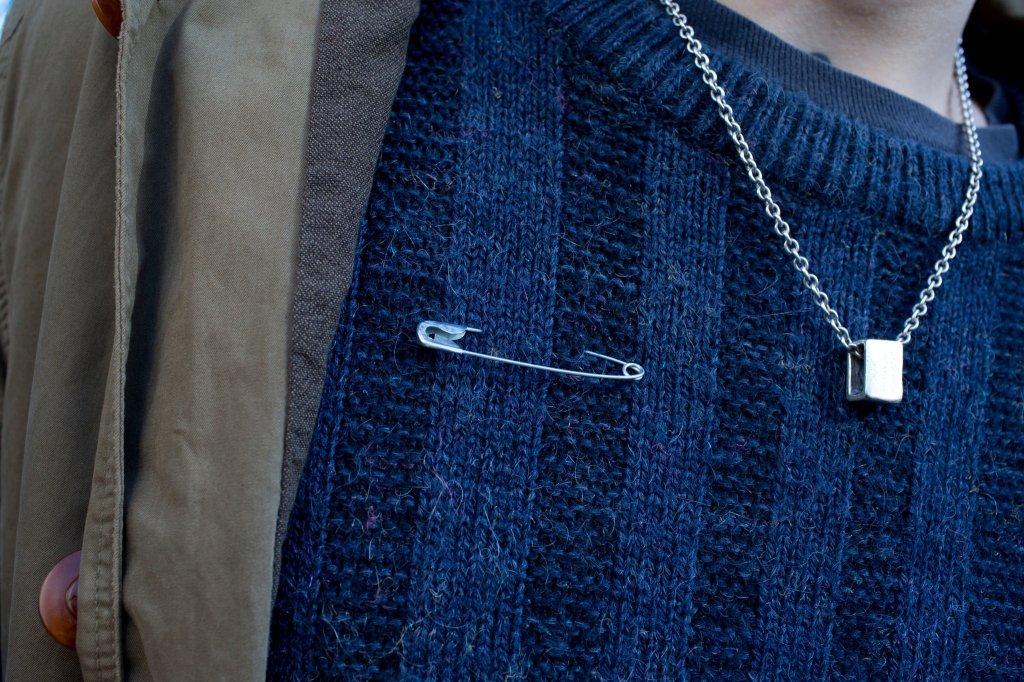
So often, those of us who claim to live by resurrection hope, find the false-security of the closet more appealing than the open air of God’s kin-dom, but there is no life to be found in the closet.
Closets, like tombs, are places of death; resurrection is the dangerous act of coming out. To be Christian is to come out as a people who are fundamentally opposed to the forces of death that would have the bodies of the marginalized bound up in the tomb like Lazarus.
This week, our society has spoken; the deathly plot that has poisoned the groundwater of our nation’s history stands before us as an immovable stone. We are afraid to roll it away; to call it what it is, because the stench of prejudice, fear, and hatred might just overcome us.
Oh, but people of faith we have heard the voice of Jesus crying from beyond the darkness of the tomb; Can you hear his command? Will you heed his cry? Will you come out?
Rembrandt & Milk images are from Wikimedia Commons.
Safety Pin Image, Andrew Lichtenstein/Corbis, via Getty Images
 Any Frontier